
Caring for a Dachshund means pairing positive training and daily routines with coat-specific grooming, measured meals, age-appropriate care, and careful back protection. These dogs bring long bodies, short legs, and big personalities into homes across the country. They were originally bred to hunt badgers, a job that called for courage and independent thinking.
They are brave, affectionate, and sometimes stubborn. Their strong personality can make daily life lively, especially when they spot a scent or hear a sound outside. This dachshund care guide offers practical steps for first-time puppy parents and longtime dog owners alike.
It follows the breed from early training through the senior years, with clear advice for daily routines and changing needs. Their bold spirit and distinctive shape make thoughtful, consistent care especially rewarding.
A short, scent-filled activity can engage a Dachshund more effectively than repeating the same cue for a long session. Short practice works well because these hounds were bred to hunt badgers and make choices on their own. Their prey drive can draw them toward scents, digging spots, and moving animals.
Reward the behavior you want with pea-sized, high-value treats and upbeat praise. Plain boiled chicken can hold a dog’s attention during a new lesson. Keep each training session to 5-10 minutes, then stop while your pet is still interested. The American Veterinary Society of Animal Behavior explains its reward-based training methods, which use rewards such as food or play.
Digging, chasing, and following scents are rewarding behaviors for many Dachshunds. Give those instincts a safe outlet with scent games, treat searches, or a digging box. Start training in a quiet room, then add mild distractions as your dog learns.
Mark the moment your dog follows a cue, then reward it right away. If a cue is ignored, make the next try easier instead of repeating it louder. This helps the dog learn what earns a reward without turning practice into a contest.
Keep each lesson brief, clear, and worth your dog’s attention.
Dachshunds can feel like a challenging breed when alert barking, prey drive, and an independent streak collide. Those same dogs can be playful, loyal companions with patient training and daily company. They are not the worst breed; they simply need clear limits and activities that fit their instincts.
Consistent timing helps puppies and adult dogs learn where to go. Take your dog outside after sleep and meals, and praise the moment it finishes in the right spot. A crate can support house training because dogs often avoid soiling their sleeping space. Choose an appropriately small crate, since its cozy space draws on a dog’s denning instincts.
Choose a crate that lets your dog stand and turn around, but not use one end as a separate potty area. Some Dachshunds dislike damp grass brushing against their low belly. On rainy days, try a covered potty area, a real-grass porch pad, or a lightweight raincoat.
Use this sample daily schedule as a steady starting point:
Young puppies may need more frequent trips than this sample schedule. Watch for sniffing, circling, or walking away from play, then go outside promptly. Clean indoor accidents with an enzymatic pet cleaner so lingering smells do not invite repeat visits.
Offer a durable chew toy when your dog mouths hands, shoes, or furniture. If nipping hurts, say “Ow!” once, pause play, and redirect to the toy. Keep your voice calm, since excited reactions can make a nip feel like part of the game.
For alert barking, calmly say, “Thank you,” then cue a positive action such as “Sit” or “Bed.” Reward the quiet behavior that follows. Yelling can add excitement or sound like you are joining the barking, so keep your response steady.
Choose a Y-shaped chest harness to spread pulling force over the ribs. Never attach a leash to a neck collar, which can strain the spine. Give the dog time to sniff during walks, but keep it safely beside you near roads or wildlife.
For a puller, try “Be a tree”: stop moving when the leash tightens. Continue walking once the leash slackens, and praise your dog for staying close. Keep the potty spot easy to reach on wet days so a damp belly does not become a reason to avoid going outside.
A quick weekly brushing may be enough for a smooth coat, while long and wirehaired coats need more targeted care. Each coat has its own texture and grooming goal. Regular checks also help you spot small problems before they bother your dog.
Brush and bathe according to the coat variety, not a one-size routine. The three recognized Dachshund coats are smooth, longhaired, and wirehaired. Their different hair needs call for different tools and timing.
| Coat variety | Features and care goal | Routine |
|---|---|---|
| Smooth | Short, slick fur; remove loose hair and support skin health | Weekly soft brush or rubber curry glove; bathe every 4-6 weeks |
| Longhaired | Soft, wavy hair on ears, chest, and legs; prevent mats and knots | Daily combing, especially ears and armpits; bathe every 3-4 weeks with quality conditioner |
| Wirehaired | Rough outer coat, soft undercoat, beard, and eyebrows; preserve texture and weatherproofing | Hand-strip 2-3 times yearly; wash beard weekly |
A soft brush or rubber curry glove can lift loose hair from a smooth coat without much fuss. Check the skin as you brush for redness, dry spots, or small bumps. A bath every 4-6 weeks is a useful routine for most smooth-coated dogs.
Longhaired dogs need a comb that can reach through the coat without pulling. Work gently around the ears and armpits, where hair can tangle during play. Conditioner helps keep longer hair easy to comb after a bath every 3-4 weeks.
Wirehaired coats benefit from hand-stripping, which removes old outer hairs and helps keep the coat’s rough texture. A groomer can show you the right method if you are new to it. Wash the beard weekly to clear food that can collect after meals.
Trim nails every 2-3 weeks, or ask a groomer or vet to help. Long nails can change how a dog walks and strain its lower back. Trim small amounts at a time to avoid the quick, the sensitive part inside each nail.
Check floppy ears weekly and wipe them with dog ear cleaner. Their shape can hold moisture, which may lead to irritation. Never put cotton swabs into the ear canal. Wipe only the parts you can see.
Small dogs such as Dachshunds can develop periodontal disease, and narrow jaws can trap plaque quickly. Brush daily with dog-safe toothpaste, never human toothpaste. Plan professional cleanings on a schedule your veterinarian recommends; annual cleanings are a useful routine to discuss.
Their short legs keep the belly close to the ground, where it can brush against rough or treated surfaces. After walks, check for scrapes, ticks, stickers, and chemical residue. Look between the legs and around the skin folds, then clean any residue as your veterinarian advises.
A comb with rounded tips can make daily grooming gentler around the ears and legs. Finish each walk with a gentle belly check, especially when the route passes through grass or treated outdoor areas.
Keeping your Dachshund lean is one of the clearest steps you can take to lower strain on the spine. Measured meals make it easier to manage weight than leaving food out all day. Extra pounds can add stress to a long back.
Weight management is the number one defense against spinal injury. Daily calorie needs depend on size, age, activity, food, and health. A veterinarian can help set a target that fits your dog rather than relying on a general estimate.

As a general starting point, Miniatures under 11 pounds may need about 200-350 calories daily. Standards weighing 16-32 pounds may need about 600-900 calories daily. These ranges are not a prescription for every dog.
Miniature Dachshunds weigh 11 pounds or less at 12 months or older. Standards usually weigh 16-32 pounds. A Tweenie is an informal name for a dog between those size categories, not a separate American Kennel Club size class.
Adult dogs generally do best with two distinct, measured meals each day. Avoid free-feeding, which can make it hard to notice how much your pet eats. Puppies need meal schedules based on age and growth.
A cup is not a fixed calorie measure because kibble brands and recipes differ in calorie density. Read the food label and weigh portions when possible. The Merck Veterinary Manual estimates resting energy needs with RER = 70 x (weight in kg)^0.75; daily maintenance estimates add a life-stage and activity factor.
Ask your veterinarian for a portion target if your dog falls between the calorie ranges or has a health concern. That advice is especially useful for a Tweenie, whose size may not fit either example. Recheck portions when activity or health changes.
Use three simple checks to see whether your dog is staying lean:
If you cannot feel the ribs easily, or the waist has disappeared, ask your veterinarian to review the dog’s body condition. A slow change in weight is easier to address than a large gain. Keep a simple record of food portions and weight checks.
A Miniature Dachshund diet still needs complete, age-appropriate food, measured portions, daily activity, and a lean body condition. Small size does not remove the need for back-aware handling. Your veterinarian can help adjust meals if a puppy, senior, or less active dog needs a different plan.
High-value training treats can be tiny. Use pea-sized pieces of freeze-dried liver or plain boiled chicken, and count them as part of the day’s food. Smaller pieces let you reward more often without handing out a full snack each time.
Green beans, cucumber slices, and raw zucchini can offer lower-calorie alternatives for dogs that enjoy vegetables. Introduce new foods in small amounts and stop if they upset your dog’s stomach. Count training treats as part of the daily food allowance so small rewards do not quietly add extra calories.
A calm first week gives a new puppy time to rest, bond, and begin feeling safe at home. Steady steps can help your puppy settle without too much change at once. Dachshunds often live 12-16 years, so their needs will shift as they grow.
Build predictable routines first, then add new experiences in small, positive steps. Make the first month simple and keep a close eye on how your puppy responds. Each dog needs time to adjust at its own pace.
Days 1-7 should focus on rest, a calm environment, bonding, and gentle crate introduction. Let your puppy explore one safe area at a time. Keep visits quiet and give the dog a place to sleep undisturbed.
Days 8-14 call for strict feeding, sleeping, and potty routines. Keep the schedule familiar and reward calm behavior. Short, repeated days help puppies know what comes next.
Days 15-30, practice short, positive crate separations while you remain nearby at first. Increase the time only when your puppy stays calm. These small steps help build confidence and may help prevent separation anxiety.
Puppies aged 8-12 weeks generally eat four meals a day. Those aged 3-6 months usually eat three meals, then puppies aged 6-12 months generally eat twice daily. Follow your veterinarian’s advice if growth or health needs call for a change.
Keep veterinary visits on schedule for exams, vaccines, and questions about growth. Use this timeline as a guide, since your veterinarian may adjust dates for your puppy’s health or local needs.
| Age | Health or development milestone | Care focus |
|---|---|---|
| 8 weeks | Initial veterinary exam and first vaccine series | Begin housebreaking |
| 12 weeks | Second vaccine series | Safe socialization in arms or controlled settings |
| 16 weeks | Final puppy shots and rabies vaccine | Begin outdoor walks on the ground |
| 12 months | Growth milestone | Discuss spay or neuter timing with your veterinarian |
Some owners delay spay or neuter until 1 year to support full growth plate closure and spinal development. Healthy puppies as young as 8 weeks can also be spayed or neutered. Ask your veterinarian to weigh timing for your individual dog, rather than treating one age as right for every puppy.
After surgery, follow your veterinarian’s directions for incision checks and activity limits. Keep the incision dry during the advised recovery period, and prevent running or jumping for as long as the veterinarian says. Call the clinic if the incision looks swollen, opens, or has discharge.
The American Kennel Club recognizes two sizes: miniature and standard. “Teacup” is not a separate recognized size category. Small puppies still need age-appropriate meals and exercise, along with care that limits strain on the back.
From ages 1-7, aim for two 20-30 minute walks each day on flat terrain. Add scent games or puzzle toys to give the mind a job without relying on hard physical play. Adjust the pace when your dog seems tired.
Use a familiar route when your dog is learning to walk calmly, then add new paths as confidence grows. A short search game at home can make rainy days more engaging. Keep play low-impact and suited to your dog’s age and comfort.
At age 7 and older, watch for joint stiffness, slower movement, or changes in sleep. Soft bedding can make rest more comfortable. Ask your veterinarian before adding Omega-3s or other supplements to a senior dog’s food.
Cloudy vision can make a room feel unfamiliar, even when your dog knows the home well. Keep furniture in fixed places and leave clear paths to food, water, and bedding. Keep the furniture layout steady if an older dog’s vision becomes cloudy, so familiar paths stay easy to follow.
A sudden wobbly walk, hunched back, or painful reaction to being lifted can signal a spinal emergency. Quick action matters because intervertebral disc disease, or IVDD, can worsen over time. IVDD is a condition in which a spinal disc bulges or ruptures and presses on the spinal cord.
As many as 1 in 4 Dachshunds develop IVDD in their lifetime. Chondrodystrophy is a body type with shortened legs that is linked to changes in spinal discs. This body type is part of the breed’s distinctive shape, and it also raises the risk of disc disease.
IVDD can start with back or neck pain, then progress to a wobbly walk, loss of hind-limb movement, or trouble urinating normally. Other signs can include limping, paw dragging, scuffed nails, or trouble defecating. Treat a sudden change in movement or comfort as urgent.
Call a veterinarian promptly if you notice any of these possible warning signs:
Possible signs can be subtle at first, so do not wait for a dog to become unable to walk. Contact a veterinarian as soon as you see a new back or neck problem. Suspected IVDD needs prompt veterinary attention and is generally treated as a surgical emergency.
Paralysis calls for emergency veterinary care within 12-24 hours for the best recovery odds. Contact an emergency clinic at once rather than waiting to see whether strength returns. Keep your dog still and follow the clinic’s instructions for safe transport.
Recovery depends in part on whether the dog still feels pain in the affected limbs. Among dogs that retain pain perception, surgery may allow 90% to regain limb use. Strict medical management may allow 60-80% to regain limb use.
When pain perception is completely lost, surgery may allow 50-60% to regain limb use. Strict medical management allows fewer than 10% to regain function in that group. These outcomes are not a promise for an individual dog; the veterinarian can explain the choices based on an exam.
After IVDD surgery, dogs need at least 4 weeks of bed rest, and recovery often takes weeks to months. Affected dogs have an approximately 25% chance of another episode after treatment. Follow the care plan closely and report any new weakness or pain right away.
When movement or strength changes suddenly, contact an emergency veterinarian instead of waiting for the next appointment.
Block every household staircase with baby gates, including stairs your dog rarely uses. A single fall can cause harm, and a gate helps prevent unsupervised trips. Keep the gate shut even when the dog seems careful.
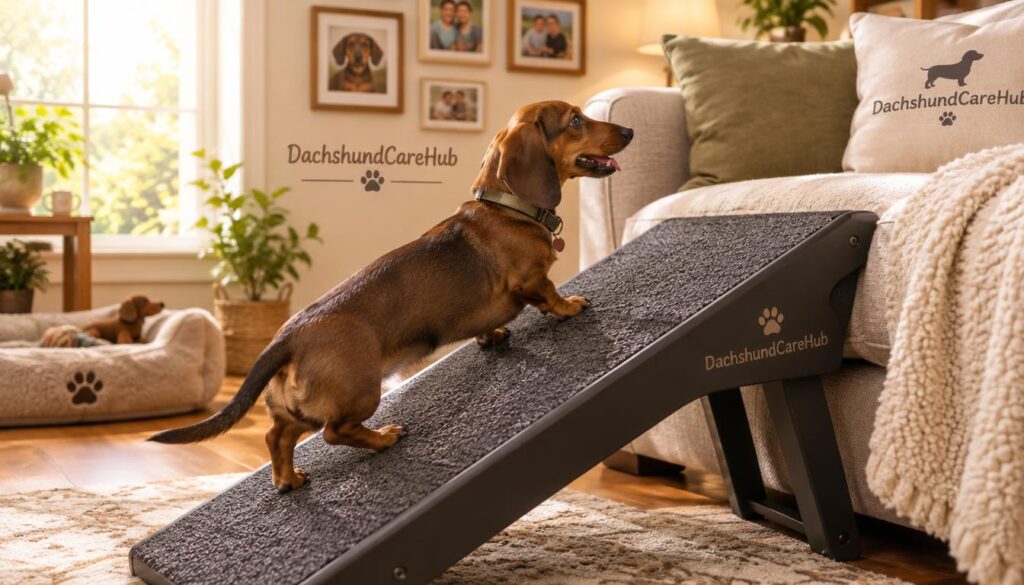
Fit non-slip ramps beside beds and couches, then teach your dog to use the same route each time. A ramp should feel stable underfoot and reach the furniture without a steep jump. Reduce jumping wherever you can, especially during excited play.
Lift with both hands: scoop under the chest and support the hindquarters. Keep the spine flat, like a table, as you bring your dog close to your body. Never lift by the front legs or armpits.
A body harness, healthy weight, and regular low-impact exercise can also help protect the back. Choose steady movement over repeated high jumps or rough play. Make resting spots easy to reach, so your dog does not need to leap onto furniture.
Call an emergency clinic right away for sudden weakness, paralysis, severe pain, or trouble passing urine. Describe when the signs began and whether they are getting worse. If your dog cannot walk, ask the clinic how to move it safely.
Bloat is a separate emergency that also needs immediate care. Non-productive retching with a hard, distended abdomen requires an immediate emergency response. Do not wait to see whether the abdomen becomes less firm.
Keep your dog quiet while arranging care, and avoid bending or twisting its back. Save your veterinary clinic’s contact information and seek urgent care at once if your dog suddenly loses strength or movement.